
I've coached women my whole life: as a cheer coach, a Girl Scout leader, a personal trainer and a private weight loss coach. I hold five personal training certifications. And at 52, I stood on a national stage in a fitness model competition of more than 1,000 entrants, most of them in their twenties, and placed in the top 10.
I'm not telling you that to impress you. I'm telling you because I know what it takes to get strong when you have a full life, and I know it's not too late. This page is the simple version of what I teach. No hype. No punishment. Just where to start.
What is strength training for women?
Strength training is any exercise where your muscles work against resistance: your own body weight, a resistance band, dumbbells, a barbell or a machine. For women, it isn't a different sport. It's the same training, scaled to where you are today.
You'll also hear it called resistance training or weight training. The names don't matter. What matters is that you ask your muscles to do a little more than they're used to, then give them time to recover.
In my signature talk, I teach three things that bring a woman back to herself: goals, habits and fitness. Fitness has three parts:
- Move first thing. I walk every morning before the day can take that time from me.
- Get strong. Lift a few times a week. Strong women stand differently. They walk into rooms differently.
- Fuel with purpose. Simple food, prepared ahead, protein first. When your plate is decided, your day is decided.
This page is about the second one. It's the one most women skip, and the one I believe changes the most.
Why does strength matter more as we age?
Research shows that muscle mass and strength tend to decline with age, and that muscle-strengthening activity helps protect your muscles and bones. Strength is what lets you carry your own groceries, climb the stairs, lift a suitcase into the overhead bin and walk into a room standing tall.
Here is what the public health sources say, in their own terms:
- The CDC says muscle strengthening "is important for older adults who experience reduced muscle mass and muscle strength with aging," and that "as you age, it's important to protect your bones, joints, and muscles." (CDC, Benefits of Physical Activity)
- The National Institutes of Health says resistance exercises "put stress on bones, so they can make bones stronger as well." (NIH, NIAMS: Exercise for Your Bone Health)
I'm a coach, not a doctor, so I won't tell you strength training will treat or prevent any condition. Many women come to me in perimenopause, menopause or after it, and my advice is always the same: ask your doctor what's right for your body, then let's build the habit together.
Here's what I can tell you from decades of watching it happen: when a woman gets strong in her body, she gets strong everywhere. Fitness leads to confidence. Confidence changes how you lead, how you sell and how you show up for the people you love.
How do I start strength training as a beginner?
Start with two full-body sessions a week, using weights light enough that you can do every rep with good form. Learn the movements before you load them. Then add a little challenge each week, and rest a day between sessions.
Before you begin: talk to your doctor before starting a new exercise program, especially if you have low bone density, joint or back pain, a heart condition, high blood pressure, are pregnant or recovering from surgery. Stop if you feel sharp pain, dizziness or chest discomfort.
My five rules for beginners
- Form first. Do each move slowly, in a mirror or on video. Quality reps now prevent setbacks later. If you can, book one session with a qualified trainer to check your form.
- Start lighter than your ego wants. The right weight lets you finish your set with a rep or two still in the tank. Many beginner plans use one or two sets of 8 to 12 reps.
- Breathe. Breathe out as you lift or push, in as you lower. Don't hold your breath.
- Rest days are part of the plan. Muscles get stronger while you recover. Leave at least a day between strength sessions for the same muscles. Walk on the days in between.
- Progress slowly. This is called progressive overload. When the last two reps of every set feel easy, add one or two reps, or move to the next weight up. Small steps, every week.
Pick habits for your worst day, not your best. A 20-minute session you actually do beats a 75-minute session you keep postponing. Consistency over intensity, every time.
How often should a woman strength train?
The CDC recommends muscle-strengthening activities at least two days a week for adults, working all major muscle groups: legs, hips, back, abdomen, chest, shoulders and arms. That applies to adults 65 and older too.
The CDC also recommends 150 minutes a week of moderate-intensity activity, like brisk walking. (CDC, Adult Activity: An Overview.) For adults 65 and older, the CDC adds activities that improve balance, and reminds us that "some physical activity is better than none at all." (CDC, Older Adult Activity.)
In plain terms: two full-body strength sessions a week is a strong start. Three is a good next step once two feels routine. Walk on most days. Rest at least one full day a week.
What are the best strength exercises for women over 50?
The best exercises are the basic movement patterns you use in daily life: sit and stand, hinge, push, pull and carry. They work for women over 40, over 50 and under 30 alike. Only the starting weight changes.
- Sit-to-stand (squat): stand up from a chair without using your hands, then sit back down with control. Later, hold a dumbbell at your chest.
- Hip hinge: glute bridges on the floor, then a dumbbell deadlift with a flat back. This is how you should pick things up.
- Push: wall push-ups, then push-ups on a counter or bench. Later, a dumbbell chest press.
- Pull: a resistance-band row or a one-arm dumbbell row, braced on a bench. Good for posture.
- Overhead press: light dumbbells pressed overhead, seated or standing, only if your shoulders feel good.
- Carry: hold a dumbbell in each hand and walk tall for 30 seconds. Simple and real-life.
- Core and balance: a plank on your forearms (or against a counter) and standing on one foot while holding a chair.
If one of these causes pain, skip it and ask a qualified trainer or physical therapist for an alternative. There is always another way to train the same muscles.
A simple beginner week
Here's the kind of week I'd suggest for a woman who is just starting or starting over. It's an example, not a prescription: adjust it to your body, your schedule and your doctor's advice.
| Day | Focus | What it looks like |
|---|---|---|
| Monday | Strength A | Sit-to-stand, wall push-up, band row, glute bridge, carry. 1–2 sets of 8–12 reps. About 20–30 minutes. |
| Tuesday | Walk | Morning walk, 20–30 minutes at a pace where you can still talk. |
| Wednesday | Rest or easy walk | Gentle walk and stretching. Let your muscles recover. |
| Thursday | Strength B | Dumbbell deadlift, overhead press, one-arm row, plank, one-foot balance. 1–2 sets of 8–12 reps. |
| Friday | Walk | Morning walk, 20–30 minutes. |
| Saturday | Optional strength or longer walk | Repeat Strength A once two days a week feels routine, or take a longer walk. |
| Sunday | Rest | Rest, family and preparation. Plan your meals and your sessions for the week ahead. |
Strength days follow the CDC guideline of at least two days a week of muscle-strengthening activity. Walking days build toward the CDC's 150 minutes of moderate activity.
Grade yourself every night. Planned five things and did four? That's 80%. Not perfect, just honest. What gets measured gets done.
Can I strength train at home?
Yes. You can build real strength at home with your own body weight, a resistance band and a pair of dumbbells. Start with what you have, and add equipment as you get stronger.
A simple home setup:
- A sturdy chair and a clear patch of floor
- One or two resistance bands (light and medium)
- A light and a medium pair of dumbbells, or adjustable dumbbells
- A mat, water and a timer
Put your shoes and weights where you'll see them in the morning. Decide your session time the night before. When the decision is already made, you don't have to talk yourself into it.

How do I get back in shape after 40, or after years off?
Start smaller than you think you need to, and start this week. Two short strength sessions, a daily walk and one simple way to keep score. The way back isn't one big effort. It's a hundred small promises kept.
I know this road personally. Not long ago, I spent six weeks caring for my parents in Michigan. One by one, I let go of every habit that made me me. The 4:30 alarm. My one-hour morning walk. The gym. My simple meals. My clothes stopped feeling like mine, and my confidence went with them.
That's when I understood: when we lose our good habits, it's not an overnight surrender. It's a slow process of quitting. One skipped walk. One late night. One "I'll start Monday." It's a hundred little quits.
"If a hundred quits got us here, a hundred days can bring us back."
You're not lazy, and you're not broken. You've been putting everyone else first. Here's how to come back:
- Decide what "first" looks like. Write your goals before you pick a workout. If you need help, read my guide to goal setting for women.
- Build the habit, not the hero workout. Two sessions a week, on the calendar, like a meeting you'd never miss. My page on confidence habits for women shows how to keep score.
- When you slip, get back up fast. One missed session is a Tuesday. Don't let it become a lost week.
- Get someone in your corner. Accountability catches you before you slip.
Not sure where to begin? Take the quiz to see where you are today and your best next step.
About the author
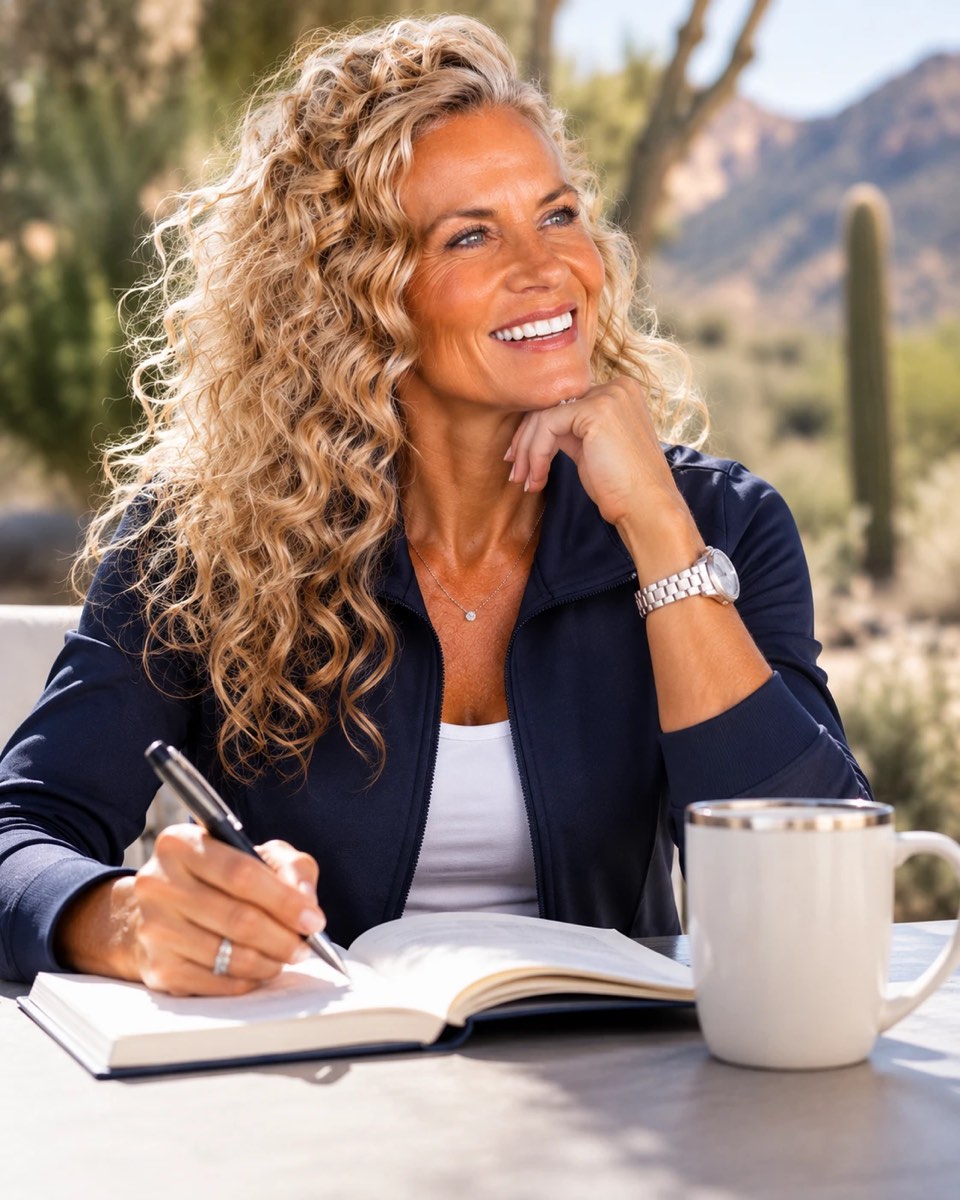
Deborah Jo Le is a Fitness Champion and Total Recreation Coach in Scottsdale, Arizona, and the creator of The Recreation Method. She was the star of the nationally syndicated radio show Ageless Fitness, holds five personal training certifications, and placed top 10 nationally at age 52 in a fitness model competition of more than 1,000 entrants. Meet Deborah →
